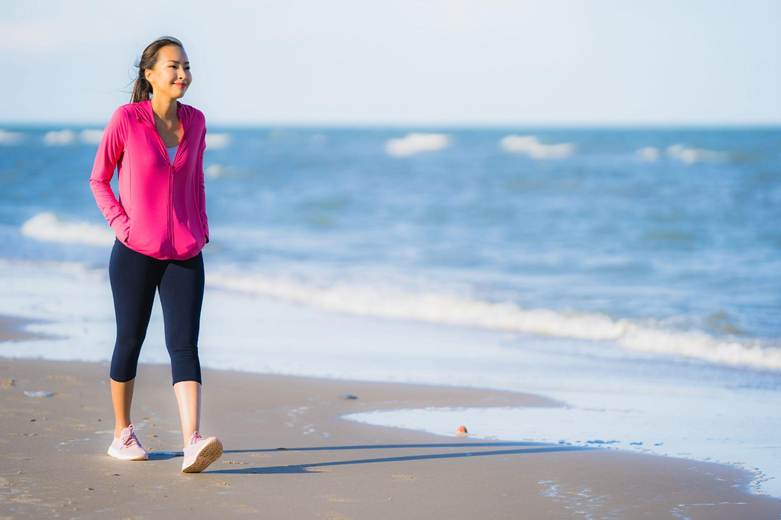
Walking along the beach can be exercise, but it does not always need to feel like a workout. Michelle Suzanne Huff explains that removing goals involving pace, distance, or calories can turn a familiar activity into an entirely different experience.
Without a performance target, a beach walk can become less about reaching a destination and more about noticing what happens along the way. The tide, weather, changing light, sounds, and people nearby become part of an outing that does not need to produce a measurable result.
Not Every Walk Needs a Finish Line
Fitness technology has made it easy to measure almost every part of a walk.
Phones and watches can track distance, pace, steps, heart rate, elevation, and estimated calories. Those measurements can be useful when someone has a specific exercise goal.
They can also quietly change the purpose of an otherwise casual activity.
A person who intended to walk for enjoyment may start checking whether the pace is fast enough or whether the outing will reach a particular step count.
Removing those targets changes the question from “How far did I go?” to “Did I enjoy being out here?”
That is a very different standard.
The Beach Encourages a Slower Kind of Attention
Walking through a neighborhood often involves traffic, intersections, sidewalks, and destinations. The beach provides a different environment.
There may still be plenty happening, but much of it does not require a response.
Waves arrive and disappear. Birds move along the shoreline. Boats pass in the distance. Footprints appear in wet sand before being erased by the water.
None of these things needs to be accomplished or solved.
When the walk is not being treated as exercise, there is more freedom to pay attention to those small changes instead of concentrating on maintaining speed.
Stopping Does Not Ruin the Walk
During a structured workout, stopping can feel like an interruption.
During a recreational beach walk, stopping may be one of the best parts.
Someone can pause to watch the water, look at something washed onto shore, take a photograph, sit for several minutes, or simply wait while a crowded section clears.
There is no need to compensate by walking faster afterward.
That freedom changes the rhythm of the outing.
The walk can include movement, pauses, conversation, and observation without any of those elements being treated as wasted time.
The Same Beach Can Feel Different Every Visit
Familiarity does not necessarily make a beach predictable.
Conditions continually reshape the experience.
The shoreline can look wider or narrower depending on the tide. Wind can make the water appear completely different from a calm day. Cloud cover changes the light, while the time of day affects both temperature and activity.
Even the people using the beach change its character.
One visit might include families, surfers, runners, or people walking dogs. Another may feel unusually quiet.
Regular visitors can begin noticing these differences precisely because they already know the setting.
Walking on Sand Naturally Changes the Pace
A beach walk also feels physically different from walking on a sidewalk or treadmill.
Sand changes underfoot. Some areas are firm while others are soft or uneven. Walking close to the water may feel different from moving through dry sand farther inland.
That variation naturally discourages expecting every walk to happen at exactly the same speed.
Instead of trying to maintain a fixed pace, walkers can choose the part of the beach that feels comfortable and adjust as conditions change.
This makes the environment part of the activity rather than merely the background for it.
Conversation Can Become the Main Activity
Walking with someone creates a different social setting from sitting across a table.
There is no requirement for constant eye contact, and natural pauses in conversation can feel less noticeable because both people are moving and observing their surroundings.
A beach makes those pauses even easier.
Someone can comment on the water, stop to look at something, or simply walk quietly for a while.
When exercise is not the primary goal, there is also no pressure to maintain a pace that makes conversation difficult.
The walk becomes something shared rather than something being completed.
Walking Alone Offers a Different Experience
A solo beach walk can be equally valuable for different reasons.
Without conversation or a schedule to follow, someone can decide moment by moment whether to continue, turn around, stop, or change direction.
There may be time to think through something that has been occupying attention, but the walk does not need to become a deliberate problem-solving session.
Sometimes the appeal is simply having fewer inputs.
There are no menus to choose from, errands to complete, rooms to organize, or notifications that require an immediate response.
For a while, walking is enough.
Leaving the Headphones Behind Changes What Becomes Noticeable
Music, podcasts, and audiobooks can make walks entertaining, but they also add another layer of stimulation.
Occasionally leaving headphones behind can make familiar surroundings feel different.
At the beach, sound is a significant part of the environment.
There are waves, wind, birds, distant conversations, footsteps, and other sounds that can disappear beneath whatever is playing through headphones.
Choosing silence does not need to become a rule. It can simply be another way to vary an activity that might otherwise feel routine.
The Turnaround Point Does Not Need to Be Predetermined
Exercise routes often have a specific distance.
A casual beach walk does not require one.
Someone might walk until a particular landmark, continue because the weather feels good, or turn around earlier than expected because conditions have changed.
The destination can remain flexible.
That can be surprisingly refreshing for people whose days are otherwise organized around appointments, deadlines, and scheduled activities.
The decision to turn around can be based entirely on the experience itself rather than a number.
A Beach Walk Can Fit Between Bigger Plans
Not every enjoyable outing needs to occupy an entire day.
A beach walk can happen before dinner, after lunch, between errands, or during an otherwise unplanned afternoon.
That flexibility is part of its appeal.
There is little preparation involved, and the outing can be as long or short as circumstances allow.
This approach also removes the pressure to make the experience exceptional.
A thirty-minute walk does not have to compete with a full day at the beach. It can simply be a pleasant part of an ordinary day.
Exercise Can Still Be a Benefit Without Being the Objective
Walking naturally involves physical activity, regardless of whether someone records it.
The distinction is about intention.
A person can enjoy moving without turning every outing into a performance measurement. Distance need not be maximized, and pace need not improve from one walk to the next.
On another day, someone may intentionally choose a faster or longer walk for exercise.
Both approaches can coexist.
The difference is deciding what kind of experience is wanted before automatically treating every walk as a workout.
Final Thoughts
A beach walk becomes different when there is nothing specific to accomplish.
Without a required distance or pace, stopping is allowed. The route can change. Conversation can take priority. Someone can turn around early or stay longer simply because the conditions are enjoyable.
The beach itself also becomes easier to notice.
Tides, weather, light, sounds, and activity continually change a place that may otherwise seem familiar.
Exercise can still happen along the way, but it does not have to determine whether the outing was worthwhile.
Sometimes walking can simply be walking, an opportunity to move through a familiar place without needing to measure, optimize, or improve it.