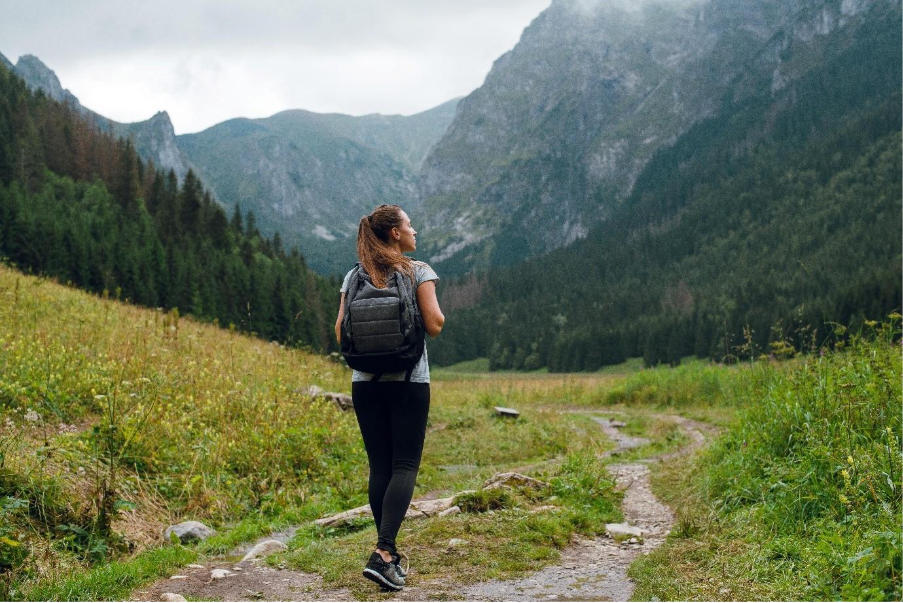
In the fast pace of modern life, it is easy to forget what it feels like to slow down and simply exist. Screens glow at every turn, calendars are filled to the brim, and the constant rhythm of notifications can make anyone feel trapped in a world that never stops. Michelle Suzanne Huff explains that there is a quiet remedy waiting just outside the walls of daily routine. It is found in the woods, along winding trails, beneath open skies, and beside still lakes. It is the simple joy of getting lost in nature, both literally and metaphorically, and in doing so, finding yourself again.
To get lost in nature does not always mean wandering without direction or purpose. It means allowing yourself to disconnect from control and expectation, to trade structure for spontaneity. It is stepping away from the screen that dictates your schedule and stepping into a world where time flows differently. Out there, the pressure to perform fades, and something within you begins to shift. The constant hum of modern life quiets, and in that silence, you start to hear your own thoughts again.
Nature invites reflection in a way that few other places can. When you walk a wooded trail or sit on a rocky overlook, there is no demand for productivity. The trees do not rush, the water does not compete, and the wind does not care what tasks remain unfinished. The natural world moves at its own steady pace, and when you align yourself with it, something in your body and mind begins to synchronize. You breathe deeper, your shoulders drop, and your thoughts slow to a manageable rhythm. It is in these moments of calm that clarity often appears.
Many people who spend time outdoors speak of the mental reset it provides. Science supports this feeling too. Studies have shown that time in nature lowers stress hormones, improves mood, and enhances creativity. Walking among trees or near water activates the parasympathetic nervous system, which encourages rest and recovery. What makes this so powerful is that nature asks for nothing in return. There is no membership fee or login required, only a willingness to step outside and be present.
The act of getting lost also challenges the part of us that craves certainty. When you leave the predictable path, you engage curiosity, patience, and problem solving. You begin to see the world as something to explore rather than control. This can be deeply freeing, especially for those who feel confined by routines and responsibilities. Losing your way for a while reminds you that not everything in life needs to be perfectly planned. Sometimes, the best discoveries are the ones you stumble upon by accident, when you are not looking for them.
For many, the first step into the unknown can feel uncomfortable. There is a fear of isolation, of not knowing what comes next, or of being away from the security of constant connection. Yet this discomfort is often where growth begins. Without the steady stream of digital noise, you begin to notice details you once ignored. The crunch of gravel underfoot, the scent of pine in the air, or the way sunlight filters through leaves. These small sensory experiences anchor you in the present moment. They remind you that peace and awareness have always been within reach, waiting for your attention.
Time outdoors also reconnects you with your sense of wonder. As children, it was easy to marvel at the shape of clouds or the sparkle of a stream. As adults, those simple joys can get buried beneath deadlines and obligations. But when you find yourself in the quiet of a forest or on a trail where the only sound is your own footsteps, that childlike curiosity returns. You begin to see beauty not as a luxury but as a necessity. You remember that joy can come from something as simple as watching the world exist without interference.
Getting lost in nature can mean different things for different people. For some, it is hiking deep into the wilderness with no set route. For others, it is a walk through a local park after work, a moment away from the concrete and noise. It could even be sitting on a beach without your phone, watching waves repeat their timeless rhythm. The setting does not matter as much as the mindset. The key is giving yourself permission to be unavailable for a while, to be unproductive, and to be fully present.
There is also a spiritual element to being immersed in the natural world. Many find that when they strip away distractions, they begin to feel part of something larger. Whether you call it peace, mindfulness, or connection, the result is the same. You sense your place within a bigger whole, and it humbles you. The vastness of a mountain range or the quiet persistence of a stream reminds you that life continues with or without your control. That realization, far from being frightening, is often freeing.
When you return from your time outdoors, you carry that sense of calm back into daily life. Problems feel smaller, priorities become clearer, and gratitude feels easier. You may find yourself less reactive, more patient, and more open to the present moment. The lesson that nature teaches is not that we must escape forever, but that balance can be found when we remember to step outside and breathe.
In the end, getting lost in nature is not about losing your way, it is about losing your need for constant direction. It is about trading noise for stillness and rediscovering what matters most. The trails, the trees, and the open sky all hold quiet lessons for anyone willing to listen. So when the world feels too heavy or too fast, take a step outside. Wander without a goal, breathe without a plan, and let the earth remind you that sometimes, the best way to find yourself is to get a little lost.