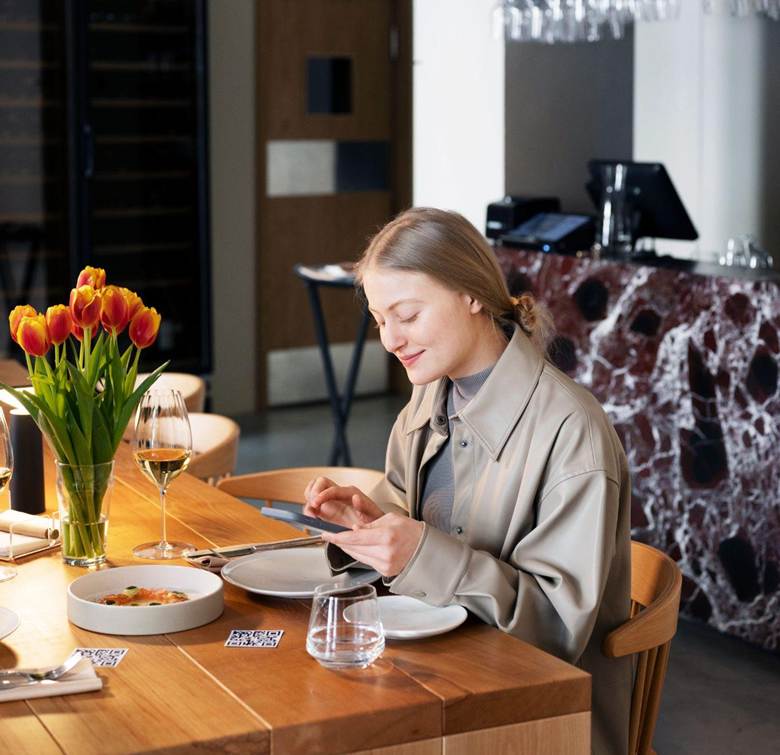
When exploring how the environment influences cognitive performance, Michelle Kangas Huff emphasizes that modern professionals often underestimate the role of structured social and sensory spaces in restoring mental clarity. In this context, curated dining environments are increasingly being examined not as leisure activities but as systems that actively regulate attention, emotional load, and cognitive recovery across demanding lifestyles.
What appears to be a simple meal experience is, in reality, a layered interruption of cognitive overload. The design of hospitality spaces, when intentional, creates conditions that allow the mind to shift out of continuous decision-making cycles and into a lower-load state of processing.
Why hospitality environments influence cognitive performance
High-performance individuals typically operate in environments defined by constant evaluation, prioritization, and rapid decision-making. Over time, such an environment creates a sustained cognitive load that does not immediately resolve when work pauses.
Hospitality environments introduce a structured contrast to that state. They do this by reducing the number of active decisions required while simultaneously controlling sensory input predictably.
These environments tend to:
- Reduce decision density by standardizing experience flow
- Stabilize sensory input through lighting, acoustics, and pacing
- Interrupt task-oriented thinking patterns
- Replace urgency with temporal neutrality
The result is not just relaxation but a measurable shift in cognitive engagement.
The psychology of “decision suspension.”
One of the most significant mechanisms in curated dining environments is what can be described as decision suspension. This occurs when the brain is temporarily relieved from making continuous micro-decisions.
During a typical high-demand day, cognitive energy is consumed by:
- Prioritizing competing tasks
- Managing communication streams
- Adjusting responses in real time
- Evaluating shifting variables across multiple contexts
In a structured dining environment, these layers are temporarily removed. Choices are limited, sequencing is predetermined, and external systems manage flow.
This allows the mind to transition into a lower-alert state where cognitive resources are no longer distributed across competing demands.
Sensory regulation as a performance tool
Hospitality environments are not neutral spaces. They are constructed with sensory intent that directly affects attention regulation and emotional tone.
Key structural components include:
- Controlled ambient sound that reduces cognitive interference
- Lighting design that softens alertness thresholds
- Spatial arrangement that minimizes overstimulation
- Service pacing that eliminates time pressure perception
Each of these elements contributes to reducing cognitive friction, allowing mental systems to disengage from high-intensity processing.
The shift from analytical thinking to perceptual awareness
A defining feature of high-performance cognition is sustained analytical engagement. However, continuous analytical thinking without interruption leads to diminished clarity over time.
Curated environments encourage a transition toward perceptual awareness, where attention is directed toward experience rather than execution.
This shift is characterized by:
- Reduced internal task simulation
- Increased attention to sensory detail
- Lowered urgency in thought processing
- Temporary disengagement from problem-solving loops
Rather than functioning as downtime, this state serves as cognitive recalibration.
Why structured environments outperform passive rest
Not all forms of rest produce equal cognitive recovery. Passive rest, such as inactivity without environmental structure, does not always reduce mental load effectively.
Structured environments are more effective because they:
- Provide external organization that replaces internal decision effort
- Maintain consistent sensory boundaries that stabilize attention
- Prevent cognitive drift back into unresolved task loops
- Support gradual reduction of mental activation levels
This structured disengagement is what allows a deeper cognitive reset to occur.
Social interaction as a moderating system
Dining environments also introduce controlled social dynamics, which play a subtle role in cognitive regulation.
These interactions often:
- Shift focus away from performance-based identity
- Encourage conversational pacing rather than task-driven communication
- Reduce hierarchical pressure associated with work environments
- Introduce emotional neutrality that supports decompression
Rather than adding cognitive load, these interactions often redistribute attention in ways that soften internal pressure systems.
The importance of environmental predictability
Predictability is a key factor in reducing cognitive strain. When individuals can anticipate how an environment will function, the brain expends less energy on processing uncertainty.
Curated dining environments often maintain predictability through:
- Consistent service structure
- Familiar progression of experience stages
- Stable environmental design across visits
- Minimal unpredictability in timing or flow
This predictability reduces the need for continuous situational scanning, which is a major contributor to cognitive fatigue.
Cognitive reset as a structured transition
Cognitive recovery does not occur instantly when activity changes. It follows a transition phase where the brain gradually disengages from prior demands.
In structured hospitality environments, this transition is supported by:
- Gradual reduction of external input intensity
- Stabilization of attention through sensory consistency
- Removal of time-based pressure cues
- Replacement of decision-heavy contexts with passive engagement
This creates a controlled pathway from high cognitive load to reduced mental activity.
Why high performers rely on environmental design
Individuals operating in high-demand roles often develop unconscious reliance on structured environments as part of their performance maintenance strategy.
This reliance is driven by:
- The need to reduce cumulative decision fatigue
- The importance of maintaining cognitive clarity across cycles
- The requirement for predictable recovery conditions
- The value of separating execution environments from recovery environments
Over time, environmental selection becomes a form of cognitive self-management.
The long-term effect of repeated structured resets
When curated environments are used consistently, they begin to condition the cognitive system itself.
This leads to:
- Faster transition into relaxed cognitive states
- Reduced resistance to disengagement from work loops
- Improved restoration of attention capacity
- Greater stability in emotional and cognitive regulation
The environment becomes not just a setting but a repeated signal for mental recalibration.
Final reflection: environment as cognitive infrastructure
Modern cognitive performance is not shaped solely by effort or discipline. It is also shaped by the environments in which recovery occurs. Structured hospitality spaces demonstrate that mental reset is not passive; it is designed, experienced, and reinforced through repeated exposure.
In this framework, dining environments function as more than social or recreational settings. They operate as a cognitive infrastructure that supports the transition between high-intensity engagement and restorative mental states.
By reducing decision load, stabilizing sensory input, and creating predictable flow, these environments allow the mind to recover not through withdrawal, but through structured reorganization of attention itself.